Gracie Barra at 40: A Team, a Federation and 1,000 Schools
How Carlos Gracie Jr. took over his late brother's students, ruled the Worlds from a Rio beach suburb and built the federation that runs them.
Roberto "Roleta" Magalhães had been a black belt for only a few weeks when the first Worlds began in Rio in February 1996. Gracie Barra saw him as its secret weapon against the pressure passing of Wallid Ismail, from Carlson Gracie's academy.1
Roleta played his guard upside down (or inverted, as they say today), and it kept knocking Wallid off balance. He took Wallid's back in the last seconds to win, then submitted Luis Roberto "Bebeo" Duarte with a triangle in the medium heavy final.1,2
Roleta against Wallid Ismail at the 1996 Worlds, posted by Heroes Martial Arts:
It was one of three black belt golds Gracie Barra won that weekend, at a tournament run by the federation its founder had created two years earlier.2,3
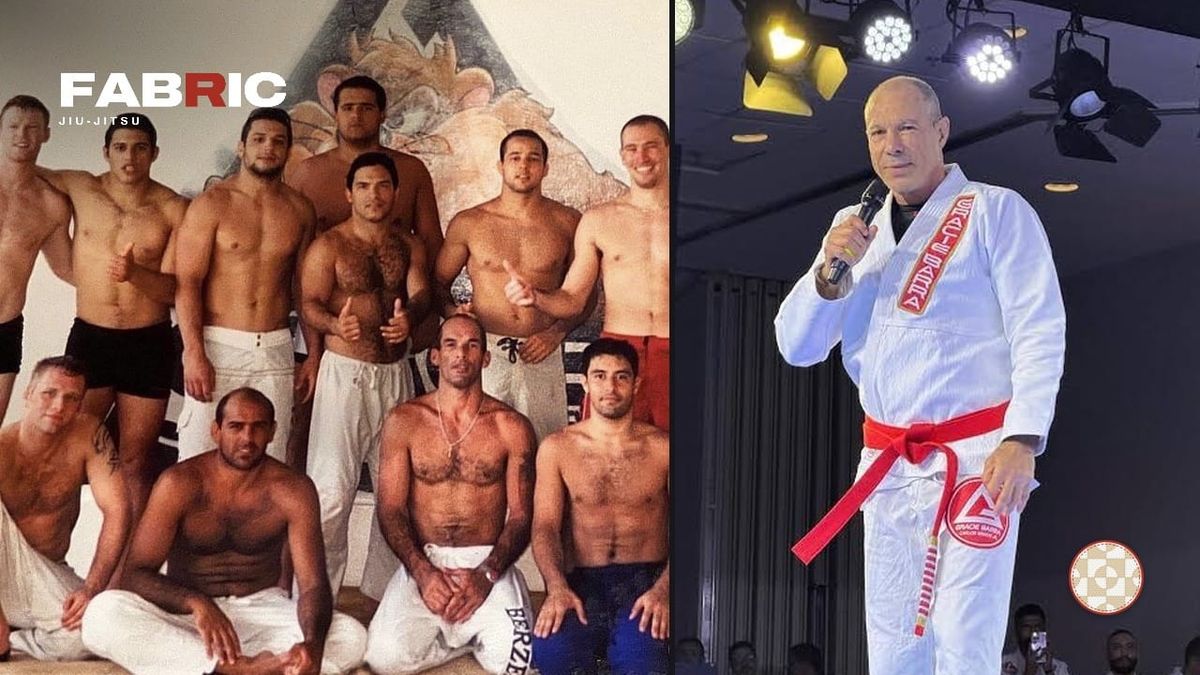
Carlos "Carlinhos" Gracie Jr. has shaped competitive jiu-jitsu from three directions at once. He built the team that ruled the Worlds in the early 2000s, the federation that runs those Worlds, and a franchise that now counts more than 1,000 schools.4
It all started 40 years ago in Barra da Tijuca, a Rio beach suburb his friends warned him to stay away from.3
Rolls Gracie's Younger Brother
Carlinhos was born in Rio de Janeiro on January 17, 1956, one of the sons of Carlos Gracie. He counts his father, his uncle Helio and his older brother Rolls as the three great influences on his jiu-jitsu.3,5
He won a Pan American sambo title in 1980 and taught for two years at the Gracie Academy before starting university to study nutrition. When Rolls began teaching on his own in Copacabana, he asked Carlinhos to assist him.3
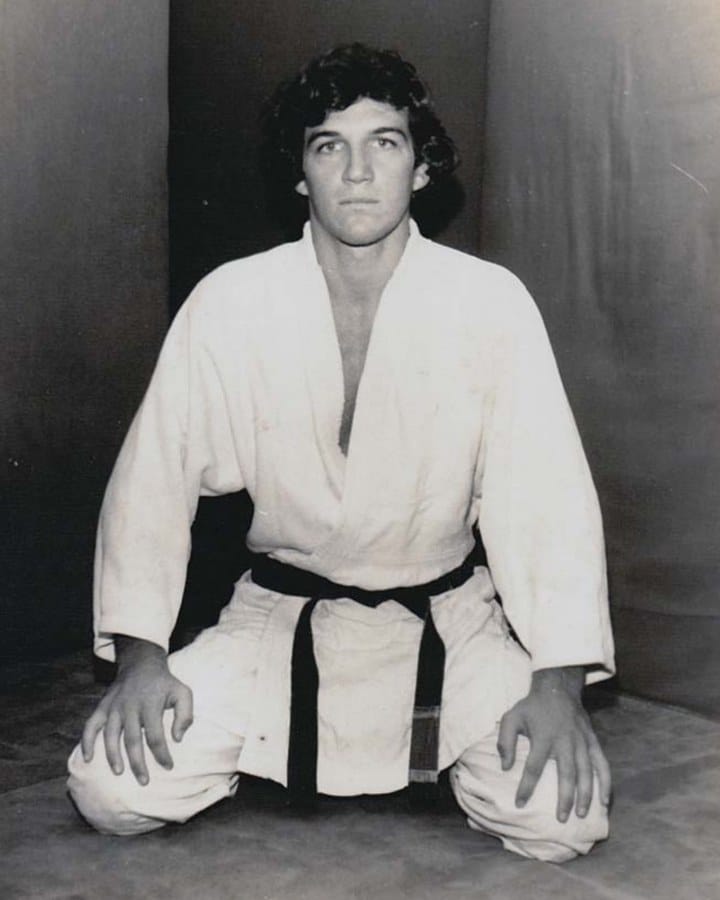
Rolls died on June 6, 1982, when a hang glider he had borrowed went down in the mountains of Mauá.6
His students and his widow asked Carlinhos to take over as head instructor, and he led the Copacabana academy for the next few years.3
Carlinhos has called Rolls his main influence. From his brother, he said, he took "the idea of having an open mind. Of learning everything that I could."7,8
Carlinhos tells how he learned jiu-jitsu, in a video from Gracie Barra's channel (in Portuguese):
The Gracies of Barra
Copacabana was crowded, and the academy there was shared with other members of the family. Carlinhos looked down the coast to Barra da Tijuca, a small surf neighborhood with a huge beach and poor roads into central Rio.7,3,9
Friends warned him the move was a mistake. He opened Gracie Barra there in 1986 anyway, with Crolin Gracie, Rilion Gracie and their friend José Leão Teixeira, known as Zé Beleza.3
Locals called the newcomers "os Gracie da Barra," the Gracies of Barra, and the name stuck. It also kept his school distinct from the family's other academies.9
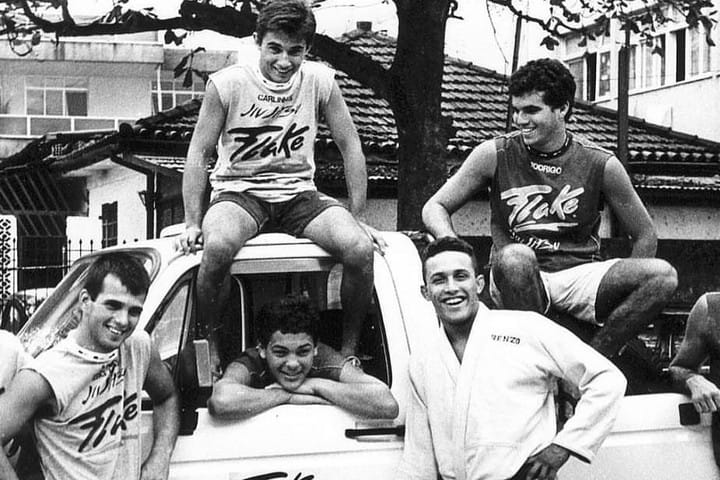
Students from Copacabana followed him, Jean Jacques Machado helped coach, and Renzo, Ryan and Ralph Gracie taught in the early years. Surfers and local fighters filled the room, and 20 students became about 200 in little more than a year.9,7,3
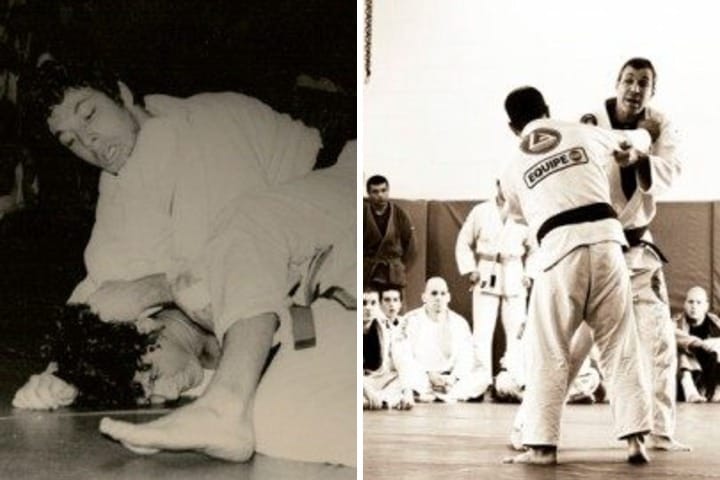
Roberto "Gordo" Correa was one of the neighborhood kids. He started training in 1985 at 14, grew up alongside Ralph, Renzo and Ryan in Barra da Tijuca, and got his black belt from Carlinhos in 1993.10,11
He was a purple belt of 18 or 19 when, as he told BJJ Eastern Europe, "I twisted my knee in training and tore my ACL."10,11
He came back before it healed, and half guard was one of the few positions that let him keep partners from passing.11,12
He has said it began as a defensive position and turned offensive as he added sweeps and submissions. His trademark became the back take from half guard, though he doesn't like being called the position's creator.10,12,13
The Federation That Runs the Worlds
In 1992 Carlinhos formed the Associação de Jiu-Jitsu da Barra with Zé Beleza and Jean Jacques Machado. In 1994 he created the CBJJ, the federation that grew into the IBJJF.3
That same year he launched Jornal Gracie with his student Luca Atalla, and the paper grew into GracieMag.3
The CBJJ held the first Worlds on February 3 and 4, 1996, at Tijuca Tênis Clube. Gracie Barra won three of its ten black belt divisions:1,2
- Helio "Soneca" Moreira (light feather): beat Wellington Dias of Gracie Humaitá in the final.
- Gordo (middle): beat Eduardo Conceição of Alliance in the final.
- Roleta (medium heavy): beat Bebeo of the Carlson Gracie team in the final.
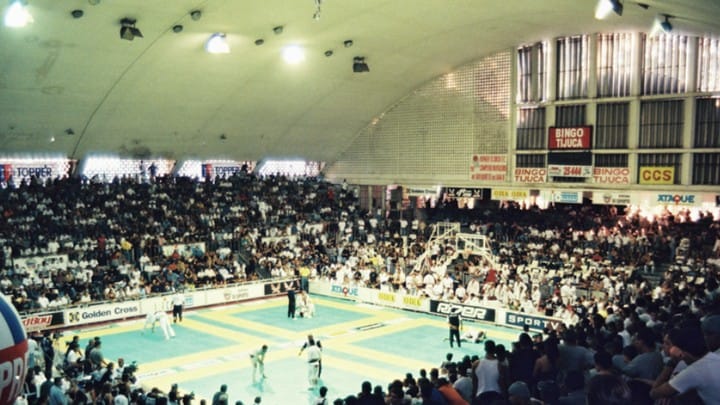
The Worlds stayed in Brazil through 2006. In 2007 it moved to California State University, Long Beach, the first Worlds held outside Brazil, and it was back in Long Beach again this May.1,14
Today the IBJJF runs the Worlds, the Pans and the Europeans, along with the International Opens we cover nearly every weekend.15
Technical Explosion and an 11-Year Streak
Carlinhos says he took what he learned from his father, Helio and Rolls and "created a teaching method in my school with all these rich elements."5
Guard play was changing in academies all over Rio in the 1990s, and Gracie Barra had some of the players pushing it forward:9
- Nino Schembri: a creative, unpredictable open guard
- Roleta: the upside-down guard, also called the inverted guard
- Renzo Gracie: attacks from butterfly hooks
- Gordo: a half guard that attacked as much as it defended
Gordo against Alexandre Paiva of Alliance at the 1996 Brasileiro de Equipes, posted by Chris Savarese:
At the 1998 Worlds, Roleta met Zé Mario Sperry of the Carlson Gracie team in the super heavy quarterfinal. Sperry had not lost in 11 years, and Roleta's guard beat him.1
Roleta went on to win super heavy, and Sperry got him back in the open class final.2,1
Eight of Ten, and Six Team Titles in Eight Years
By 2002 the team had taken over the Worlds. Gracie Barra won eight of the ten men's black belt divisions:2
- Carlos Lemos (light feather)
- Fredson Paixão (feather)
- Marcio Feitosa (light): his second straight world title.
- Delson Heleno (middle)
- Fabio Leopoldo (heavy)
- Gabriel Vella (super heavy)
- Márcio "Pé de Pano" Cruz (ultra heavy and open class)
That year a rival federation, the CBJJO, held its own world event the same weekend, and teams including Nova União sent their athletes there while Gracie Barra stayed with the IBJJF.1
The team titles kept coming. Gracie Barra's world team titles in the IBJJF's results:2
| Year | Team title |
|---|---|
| 2000 | Men |
| 2001 | Women |
| 2002 | Men |
| 2003 | Men |
| 2004 | Men |
| 2005 | Men and women |
| 2006 | Women |
| 2007 | Men |
Feitosa gave the credit to his teacher, pointing GracieMag to "the work 'Carlinhos' did as the educator for an entire generation" of young people in Barra.16
The next wave was led by Roger Gracie, Carlinhos's nephew, who got his black belt from his uncle in 2004 and won his first black belt world title that same year.17,2
Roger's favorite finish was one of the first chokes students learn, the cross collar choke from mount. In 2005 he also won the ADCC 99 kg division and the absolute, submitting all eight of his opponents.17
Roger against Rafael Lovato Jr. in the 2009 open class quarterfinal, from the IBJJF's channel:
Among the Gracie Barra black belts who won world titles from 2003 to 2010:2
- Roger Gracie: ten titles from 2004 to 2010, including the open class in 2007, 2009 and 2010.
- Braulio "Carcará" Estima: medium heavy in 2004 and 2006 and heavy in 2009, the same year he won the ADCC 88 kg division and the absolute.18
- Romulo Barral: medium heavy in 2007 and 2009.
- Bibiano Fernandes: light feather in 2003, 2005 and 2006.
- Samuel Braga: rooster in 2005, light feather in 2008.
Three times, in 2007, 2009 and 2010, the open class final at the Worlds was Gracie Barra against Gracie Barra, and each time Roger beat Romulo Barral.2
Roger against Romulo Barral in the 2009 open class final, from the IBJJF's channel:
The Women Who Won for Gracie Barra
Gracie Barra's women won the world team title in 2001, 2005 and 2006. In those years the IBJJF ran women's brown and black belts together in one division.2
Kyra Gracie, a great-granddaughter of Carlos Gracie, was the first woman in the family to make her name in competition. She got her black belt from Carlinhos at 21 and moved her training to Gracie Barra's headquarters in 2005.19,20
She won the ADCC in 2005, 2007 and 2011, the first on her 20th birthday, and never lost a match in her division. At the Worlds she won lightweight for Gracie Barra in 2006, then lightweight and the open class in 2008.20,2
Other Gracie Barra women who won world titles in those years:2
- Poliana Lago (middle): 2005
- Luzia Fernandes (medium heavy): 2006
- Ana Laura Cordeiro (medium heavy): 2008
- Bianca Barreto (feather): 2008, 2009 and 2010
The line runs into this decade. Andressa Cintra won her fifth straight black belt world title at middleweight in 2024, taking her opponent's back and finishing with a choke in the final.21
Andressa Cintra against Thamara Ferreira in the 2021 middleweight final, from the IBJJF's channel:
Where the Branches Grew
Many of the instructors from those first years went on to open academies of their own around the world.7
Renzo Gracie got his black belt from Carlinhos and opened his academy in New York, which quickly became a reference for jiu-jitsu in the United States.22
Gordo built Gordo Jiu-Jitsu, which had world champions in Celso Vinicius at light in 2005 and Antonio Braga Neto at super heavy in 2008.2
Vinicius "Draculino" Magalhães was the first to open a Gracie Barra academy outside Rio de Janeiro. His school in Belo Horizonte gave Romulo Barral his black belt in December 2005 and started Felipe "Preguiça" Pena in jiu-jitsu at 14.23,24,25
Preguiça still competes for Gracie Barra. He won the ADCC absolute in 2017, and in September in Kraków he won it again to become the first two-time absolute champion in ADCC history.25
Romulo opened Gracie Barra Northridge in California in August 2011, and Roger settled in London and built the Roger Gracie Academy.26,17
Forty Years Later, a Red Belt in Barra da Tijuca
In 2005 Carlinhos and Marcio Feitosa opened Gracie Barra's first school outside Brazil, in Lake Forest, California. It later moved to Irvine, where the team now keeps its headquarters.7,27
On June 3, 2008, about 50 black belts and family members, Rickson Gracie among them, gathered at the new headquarters to watch Carlinhos receive his coral belt. Renzo tied it on him and cried through his speech.28
Renzo recalled how his uncle used to run him down in front of the room when he was young, reverse psychology that pushed him to prove Carlinhos wrong.28
Carlinhos spoke last. He said belts held no importance to him and closed with, "This is just the beginning."28
In 2011 Gracie Barra made Jiu-Jitsu for Everyone its slogan and moved its old motto to its competition department. It grew through franchise schools and a certification program for its instructors.16
Today it counts more than 1,000 schools, with a stated vision of one school in every community in the world.4
Carlinhos at 56, sparring at a Gracie Barra competition camp, in a clip posted by Marcio Feitosa:
On April 25, at the Gracie Barra World Summit in Barra da Tijuca, Carlinhos was promoted to red belt. Feitosa was among the longtime instructors promoted to coral belt that same afternoon.29,30,31
The next day he stepped on the mat to teach his first class as a red belt, an armlock, in the neighborhood where Gracie Barra began 40 years earlier.31
The open mind he took from Rolls is still part of the school. Gracie Barra's curriculum has never said a new technique can't be taught.8
Notes
- "20 Years of Jiu Jitsu World Championships," BJJ Heroes.
- World Jiu-Jitsu IBJJF Championship results, IBJJF: 1996, 1998, 2000, 2001, 2002, 2003, 2004, 2005, 2006, 2007, 2008, 2009, 2010.
- "Carlos Gracie Junior, Carlinhos Gracie," BJJ Heroes.
- "About Us," Gracie Barra.
- "3 Great Influences: How Master Carlos Gracie Jr. Developed His Teaching Philosophy," Gracie Barra.
- "The Legacy of Rolls Gracie," Mauricio Gomes.
- Mark Mullen, "A Short History of Gracie Barra," Gracie Barra.
- "The Teaching Philosophy of Master Carlos Gracie Jr.," Gracie Barra.
- "Gracie Barra Academy," BJJ Heroes.
- "Roberto 'Gordo' Correa On How He Developed The Offensive Half Guard," BJJ Eastern Europe, February 12, 2020.
- "Roberto Gordo Correa," BJJ Heroes.
- "The Half Guard," BJJ Heroes.
- "Roberto Gordo | Old School: Legends of Jiu-Jitsu," FloGrappling.
- Joe Gilpin, "2026 IBJJF Worlds Day One Recap: Omar Nada Captures Brown Belt Double Gold," FloGrappling, May 29, 2026.
- "Carlos Gracie Jr: 'Sport Jiu-Jitsu is a Perfected Form of Self Defense Jiu-Jitsu'," BJJ Eastern Europe, January 11, 2024.
- "Jiu-Jitsu for everyone," GracieMag, June 17, 2011.
- "Roger Gracie," BJJ Heroes.
- "ADCC Submission Fighting World Championship 2009 results," ADCC.
- "Kyra Gracie," BJJ Heroes.
- "Kyra Gracie Inducted Into The ADCC Hall Of Fame," BJJ Eastern Europe, December 15, 2021.
- Lorena Balli, "2024 IBJJF Worlds Black Belt Results and Recap," IBJJF.
- "Renzo Gracie," BJJ Heroes.
- "Draculino: Lots Of People Think They Know The Basics, But They Really Don't," BJJ Eastern Europe, March 7, 2022.
- "Romulo Barral," BJJ Heroes.
- "Felipe Pena," BJJ Heroes.
- "Gracie Barra Northridge," GracieMag.
- "Gracie Barra Irvine," Gracie Barra.
- "Tears, a fight in the kitchen and a red-and-black belt," GracieMag, January 14, 2010.
- "A historic moment in Jiu-Jitsu, live on GB Online," Gracie Barra.
- "Gracie Barra Oceania Celebrates 40 Years of Legacy at World Summit 2026," Gracie Barra Oceania, May 11, 2026.
- "A Homecoming 40 Years in the Making: Celebrating Gracie Barra in Rio de Janeiro," Gracie Barra, May 5, 2026.
Photos in The Gracies of Barra are from Gracie Barra Oval. The photo of Rolls Gracie is from the Gracie family archives, via GracieMag. Videos are embedded from YouTube, and the line above each one names the fight or the uploader.